Ride free on old buses in service on London bus route 106 between Finsbury Park and Ash Grove ~ 3rd October 2026!
Route 106 first appeared as such in 1914, running from Colney Hatch Lane via Muswell Hill, Archway, Finsbury Park to Leytonstone. Since then, it has seen many changes, but today, it still serves Finsbury Park, Clapton Pond and Hackney.
On Saturday 3rd October 2026 between 1000 and 1700, the London Bus Museum will be running free heritage buses dating from the 1950s to 1970s alongside the normal daily service on route 106.
Open-platform buses with real conductors will run between Finsbury Park and Ash Grove. Buses serve all route 106 bus stops - no need to book, just turn up at a route 106 bus stop and put out your hand and enjoy a ride back in time!
Buses being used will mostly be the iconic Routemaster, dating from the late 1950s and 1960s, and their predecessor the RT-type, which in the 1950s formed the largest standardised bus fleet in the world, together with some special buses. Some buses are from the Museum’s collection, others provided by other owners. And it’s all free!
On the same day, an Open Day is planned at Stagecoach London's Ash Grove garage. Come and see behind the scenes!
Please note that all the buses used pre-date the low-floor, easy access buses that we take for granted today and there are steps at the entrance and inside.
Most modern buggies cannot be carried as they are too large to fit under the stairs; nor can wheelchairs be accommodated. However conductors will make every effort to help the less able and those with small children enjoy a ride back in time.
Well-behaved dogs are welcome but are carried at the conductor's discretion, and must be on a lead and not occupy seats.
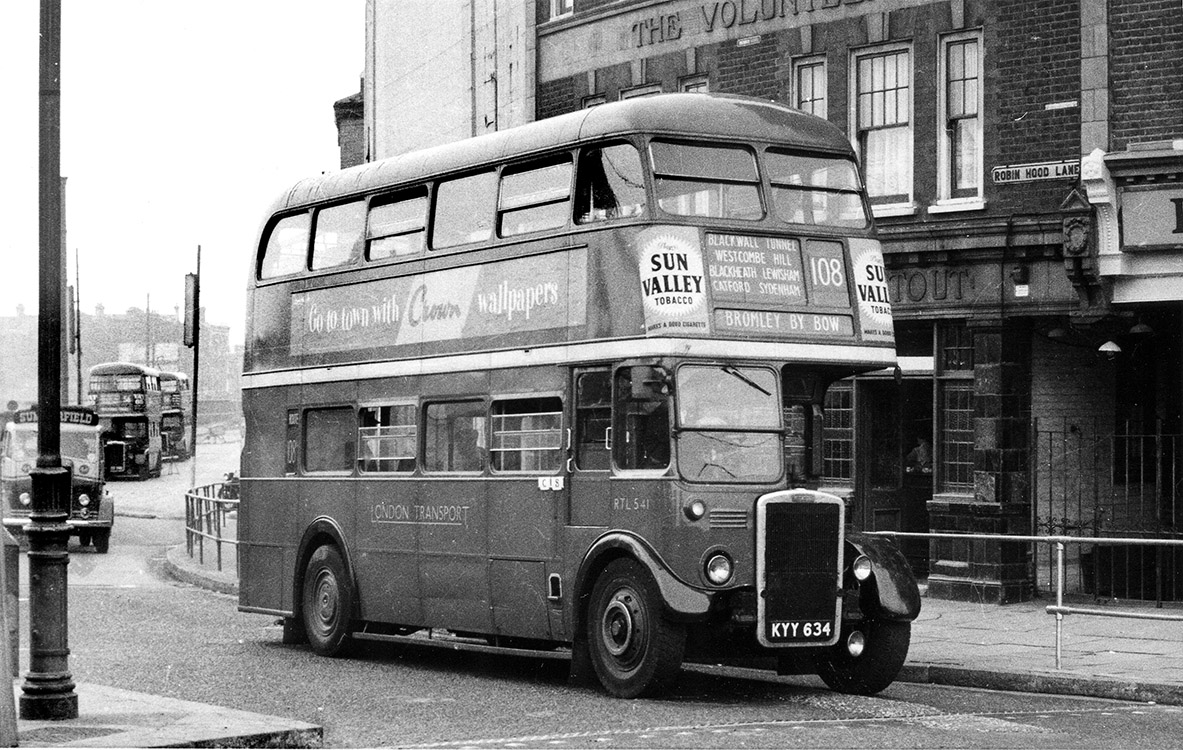
East End RTLs - MetCam RTL541 on the 108 is passing the Volunteer on the corner of Robin Hood Lane and East India Dock Road; this was the name of the original terminus on which RTLs on the 56 and 106 are standing in the background. © Fred Ivey
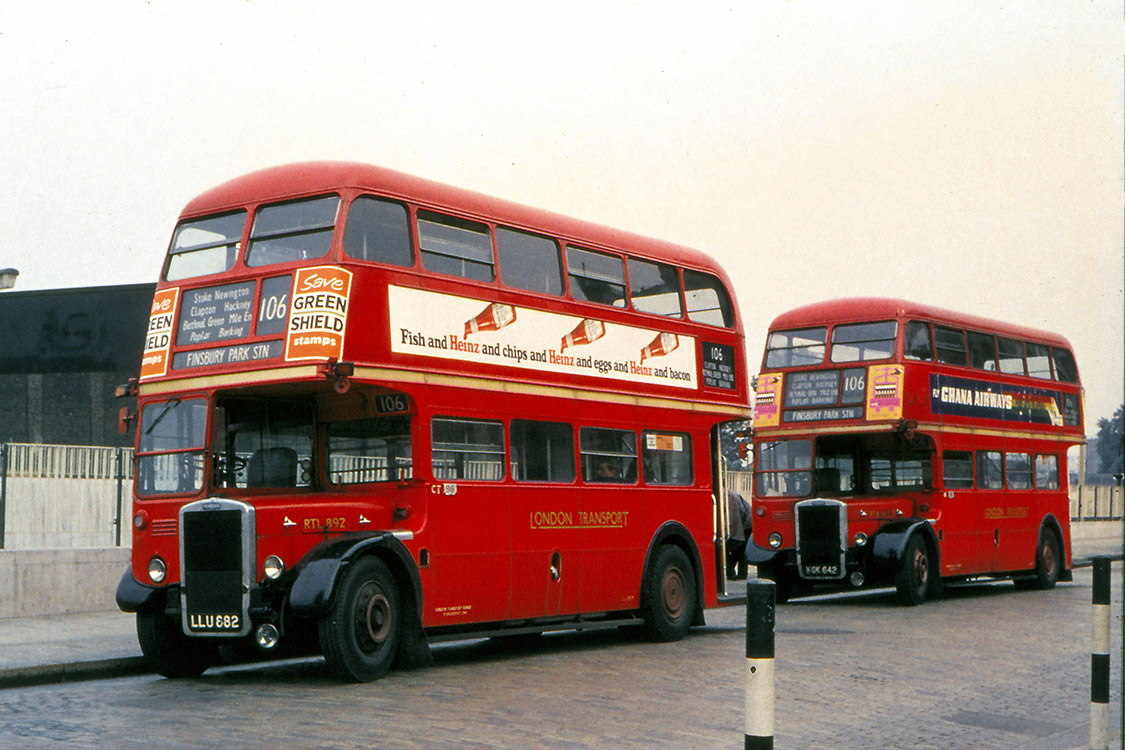
Clapton’s MetCam RTL892 and Hackney’s RTW142; Blackwall Tunnel stand in Robin Hood Lane; 1964/5; © Fred Ivey
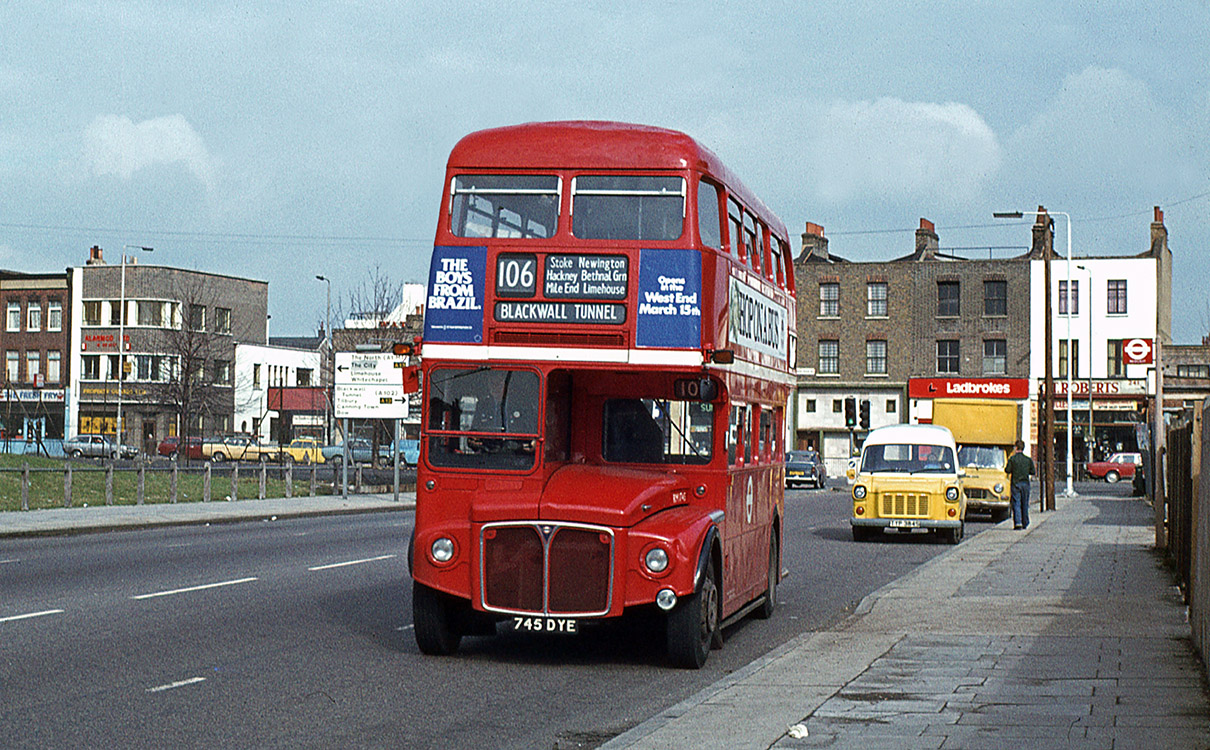
RM745 in Poplar, heading for the Blackwall Tunnel; © David Bowker
Featured in


- A brief history of London bus route 106
- Photo gallery ~ buses on route 106
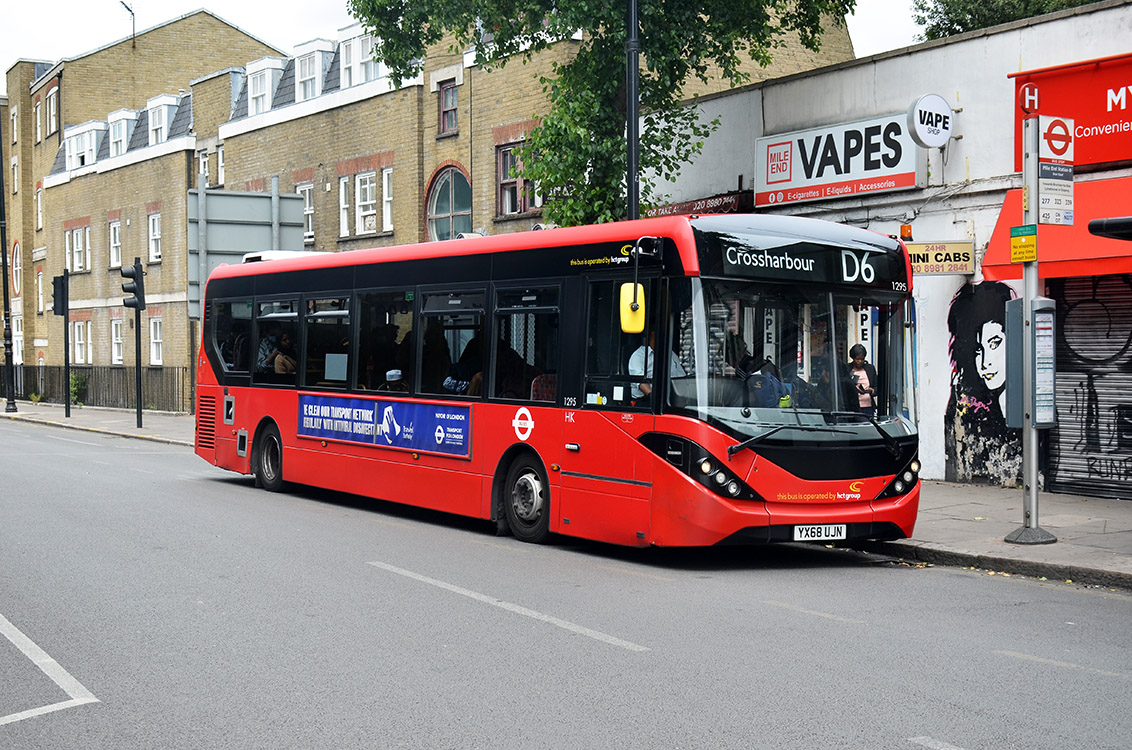
- Photo gallery ~ buses on route D6
- Maps
- Event flyer [PDF]
- Event timetable [PDF]
- Event bus list [PDF]
Check back regularly for updates.

A brief history of London bus route 106
As London expanded in the 1880s and 1890s to encompass Finsbury Park, Stoke Newington and Clapton, additional orbital horse omnibus links were added. By 1895, Henry Marshall was running a ‘bus every 15 minutes between Finsbury Park and Stoke Newington via Lordship Park. By the following year, this ‘suburban’ route had been extended via Northwold Road to Clapton Pond and was operated by brown buses jointly by the London General Omnibus Co (LGOC) and Thomas Tilling – the colour of a horse bus denoting the route. On 17 January 1907, Commercial Motor commented ‘Another example of a service in which the horsed omnibuses are likely to survive, is that between Finsbury Park and Clapton. The number of passengers who require to travel on this route is comparatively few, so that, although horsed omnibuses do just pay, it is very doubtful whether motor omnibuses would do so.’ In 1908, the route was numbered 35 and in December 1910 operation passed solely to Thomas Tilling.
The horse bus route was replaced by LGOC motor buses on 19 August 1912, initially numbered 88, then in December 1912 merged with route 87 under the latter number and now running from Colney Hatch Lane to Clapton Pond via Muswell Hill, Archway and Finsbury Park. On 29 March 1914, the route was renumbered 106 and extended again (briefly) via Leyton to Leytonstone. This rather unwieldy route was shortened and by December 1914 was back to the running between Finsbury Park and Clapton Pond.
In early 1915, the route was briefly combined with route 56 to run from Finsbury Park to Millwall Docks under number 56, reaching the southern end of the Isle of Dogs via West Ferry Road. In March 1915, the northern part of the route was split off again as the 106 and the 56 restricted to running Mile End to Millwall Docks – to be extended during the war right round the Isle of Dogs to share a terminus with the 106 at Blackwall Tunnel.
Meanwhile the new 106 continued south from Mile End via Burdett Road and along East India Dock Road to terminate above the Blackwall Tunnel entrance at The Volunteer. The pub is no longer there, but the location of the stand in Robin Hood Lane is still visible. The route between Clapton Pond and Mile End was Mare Street, Cambridge Heath Road, Roman Road and Grove Road. This 1915 section of the route was essentially unchanged until the introduction (on Monday to Saturday) of new route D6 in March 1989 between Hackney Central and the Isle of Dogs.
The B types of 1915 were replaced by open-top solid-tyred NSs in 1925, although Sundays had already seen operation by S types. Covered-top NSs first appeared on Sundays in late 1926. Core operation was by Poplar Athol Street (C) and Leyton (T), with different garages contributing on Sundays through the years. 1933 saw a phased conversion from NSs, first to STs and then to LTs.
In September 1928, the route received a substantial extension eastwards, via Canning Town and Beckton Road, along what is now the A13, turning north at River Road to Barking and Becontree, terminating at Chitty’s Lane. Buses ran from Finsbury Park to Poplar every 4 minutes, continuing to Becontree every 12 minutes and taking 1½ hours for the full trip. The vehicle requirement fluctuated around 38 buses for the next 10 years. On Summer Sundays from Easter 1929 to June 1933, the route was further extended to Upminster, these journeys being operated by Forest Gate (G). In October 1934, part of the service to Blackwall Tunnel was extended to Royal Victoria Dock, and between February 1937 and October 1942 some journeys were extended to West Ham Stadium. In July 1941, the Victoria Dock journeys were replaced by trolleybus 569.
Athol Street replaced its LTs with new STLs in 1934, but Leyton continued to operate LTs until the outbreak of the Second World War, when both Athol Steet and Leyton ceased to operate the route, replaced by Hackney (H) and (at weekends) Tottenham (AR), both with STLs; the requirement dropped to 28, falling to 20 by the end of the war before returning to 28. Leyton took back the route from AR during 1941.
In 1950, Leyton’s LTs were replaced by postwar STDs for two years, with RTs appearing on Saturdays. Meanwhile, Clay Hall (CL) had joined the mix on Sundays from 1946 with STLs, converting to RTLs in 1950 until replaced by Dalston (D)’s RTWs in 1952. Hackney’s STLs were replaced during the week by RTLs from mid-1952, weekends seeing RTs (briefly), RTLs and RTWs, until the entire allocation from H and D settled down as RTW from early 1953. T’s weekday allocation remained RT until withdrawing from the route in 1964.
From November 1958, following the disastrous strike earlier that year, the Sunday route was recast as 106A and withdrawn from Barking and Becontree, instead continuing to Dagenham (new Road) in place of the 175 from Blackwall. D and H continued to provide RTWs and were joined between 1960 and 1964 by former trolleybus depot Clapton (CT) who provided RTLs. Sunday operation was converted to RM in 1963 (from D) and 1964 (from H).
Routemasters were not scheduled on the 106 until 1968. Leyton’s RTs were replaced in 1964 by RTLs from CT and in 1966, Hackney replaced its RTWs with RTLs and a third garage joined, Poplar (PR), another former trolleybus depot. 1968 saw the end of RTL operation, Clapton converting to RTs in 1967, H and PR in 1968, by which time CT was operating only on Saturday and with RMs. The remaining RT workings were replaced by RMs by the end of 1968.
But things might have been different. The RTs that replaced RTLs at PR came from Wood Green, where the first stage of the Reshaping Plan had replaced them and their routes with Merlin-operated flat fare routes. But trade union agreement to those changes did not come until two months before, so back-up plans had been made for a network of RT routes in their place (to be numbered 269, 288 and 294), in which case the retirement of RTLs would have been postponed.
On 16 January 1971, the 106 was withdrawn east of Blackwall Tunnel and the 106A withdrawn, leaving a daily operation between Finsbury Park and Blackwall Tunnel, as it had been between 1915 and 1928. Tottenham replaced Poplar in working alongside Hackney and the route enjoyed a year and a half of daily RM operation before being converted to one-person operation on 12 August 1972, using DMSs from both garages.
A temporary reprieve for crew operation occurred between 31 March 1979 and 4 September 1982, with the return of RMs initially from H and AR but both replaced by a new garage at Ash Grove (AG) from 25 April 1981. The second conversion to one-person operation involved a small increase from 14 RMs to 16 Ts, further increased by one a year later when the route was extended from Blackwall Tunnel to Isle of Dogs Asda. A partial conversion from T to M in 1984 was reversed by 1986.
1989 saw new route D6 introduced on 4 March, one of several new routes in the newly developing Docklands area. This ran from Hackney Central Station via the 106 route to Isle of Dogs Asda and replaced the 106 on Monday to Saturday, using 10 Ts from AG (replaced by single-deck LSs from August 1990). The Sunday 106 continued to run to Blackwall Tunnel, but the weekday route was diverted at Bethnal Green to run to Mile End Gate (at the south end of Cambridge Heath Road, where Sainsbury’s is now) with a reduced allocation of 11 Ts. In April 1991, the evening service was withdrawn from Mile End Gate and replaced the D6 running to Blackwall Tunnel and (early evenings) Isle of Dogs Asda, this variation lasting only a year. In September 1993, the route was extended the short distance along Whitechapel Road from Mile End Gate to Whitechapel Station.
In 1988, London Buses was divided into operating divisions and Ash Grove became part of London Forest. On 23 November 1991, after strike action by London Forest staff (which caused the suspension of the 106 from 11-28 July 1991), operation of route 106 was transferred from AG to Clapton, part of Leaside Bus, using Ms (prior to the next change of operator, the 106 also saw operation by Alexander-bodied Olympians). Operation of the D6 was transferred to East London Buses on the same day, operated from West Ham (WH) on Monday to Friday and Bow (BW) on Saturday. WH used double-deck Ts initially, replaced by LSs from February 1992; BW used Ts. However, by this time, tenders had been issued for the D6 and the new contract awarded to Capital Citybus, commencing May 1992. At this date, the 106 was withdrawn entirely from Blackwall and the Isle of Dogs, running instead daily to Whitechapel and replaced daily to Crossharbour by the D6.
When the 106 was tendered with effect from April 1996, operation passed to Docklands Transit, working from their Silvertown (SI) garage using single-deck Dennis Darts on an increased frequency. In July 1997, Docklands Transit was acquired by Stagecoach and operation passed to East London, with operation moving to Stratford (SD) three months later, using PD class Darts. In October 2001, the 106 was converted to double-deck Trident operation. From April 2001, a night service numbered N106 was added, continuing along Whitechapel Road to Aldgate; the route was replaced (in part) from April 2008 by early and late journeys on the 106. Before that, in February 2008, operation of the 106 and N106 moved to West Ham (WH).
From December 2009, the southern terminus of the 106 moved from Whitechapel Station to south of Whitechapel Road at Cavell Street. Subsequent tenders for the 106 saw operation move to Arriva London, from Ash Grove (AE) using Volvo B7s, in April 2013, then in June 2020 to current operator GoAhead London, using electric Enviro400EVs from Northumberland Park (NP).
The D6 remained with Capital Citybus through their takeover by First Group in July 1998, until in September 2011 the tender was won by GoAhead subsidiary Docklands Buses. In June 2013, the route was shortened at the Hackney end, being withdrawn between Hackney Central and Cambridge Heath, creating the route as it operated today. In September 2018, the tender was won by CT Plus, whose TfL contracts passed to Stagecoach London in August 2022. Stagecoach continue to operate the route, mainly with Enviro200 single-deckers, from Ash Grove (HK).
Photo Gallery
Click on photo for gallery. Hover on photo for caption
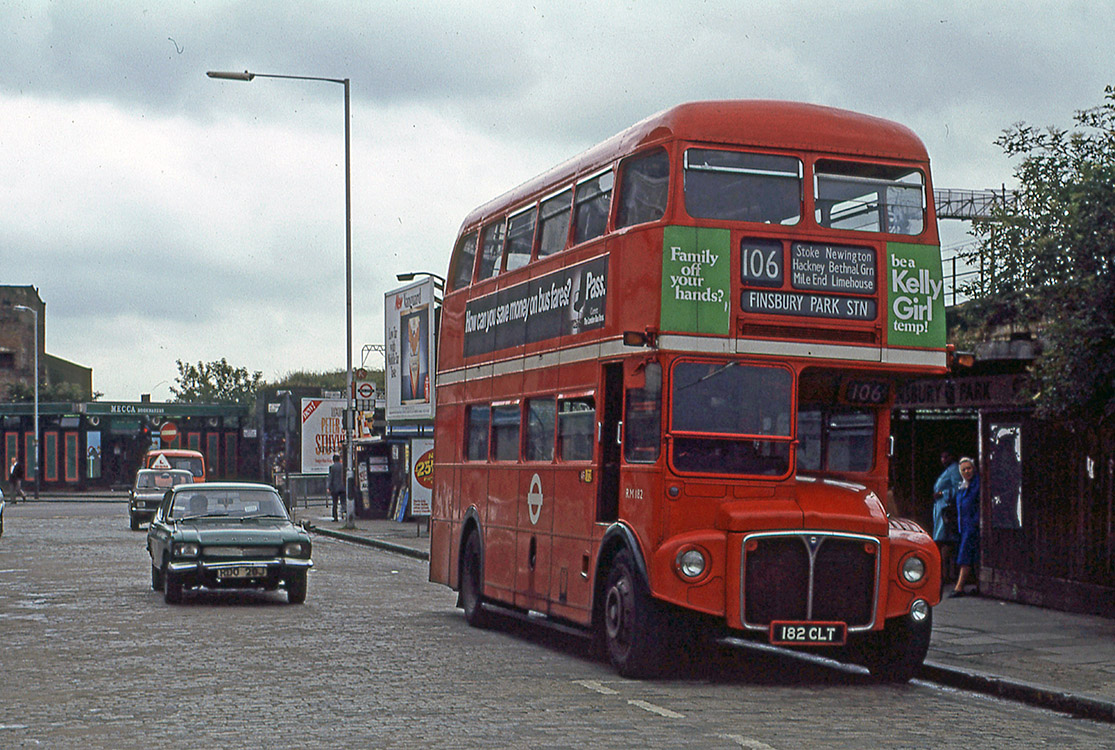
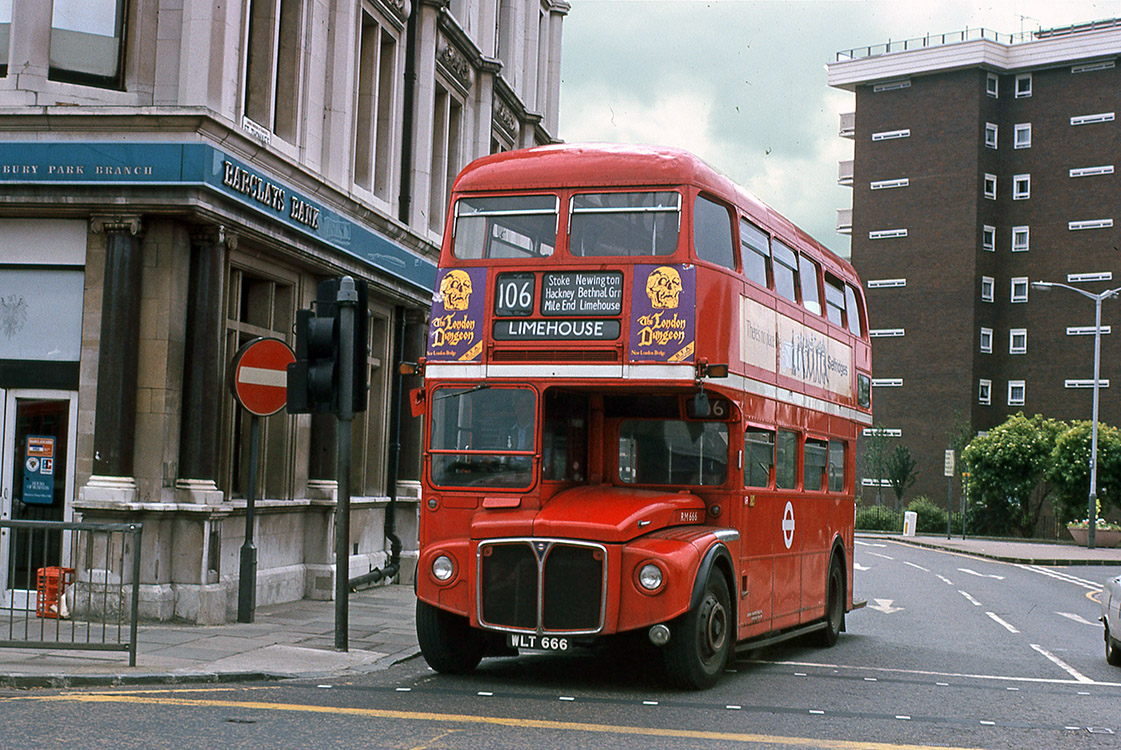
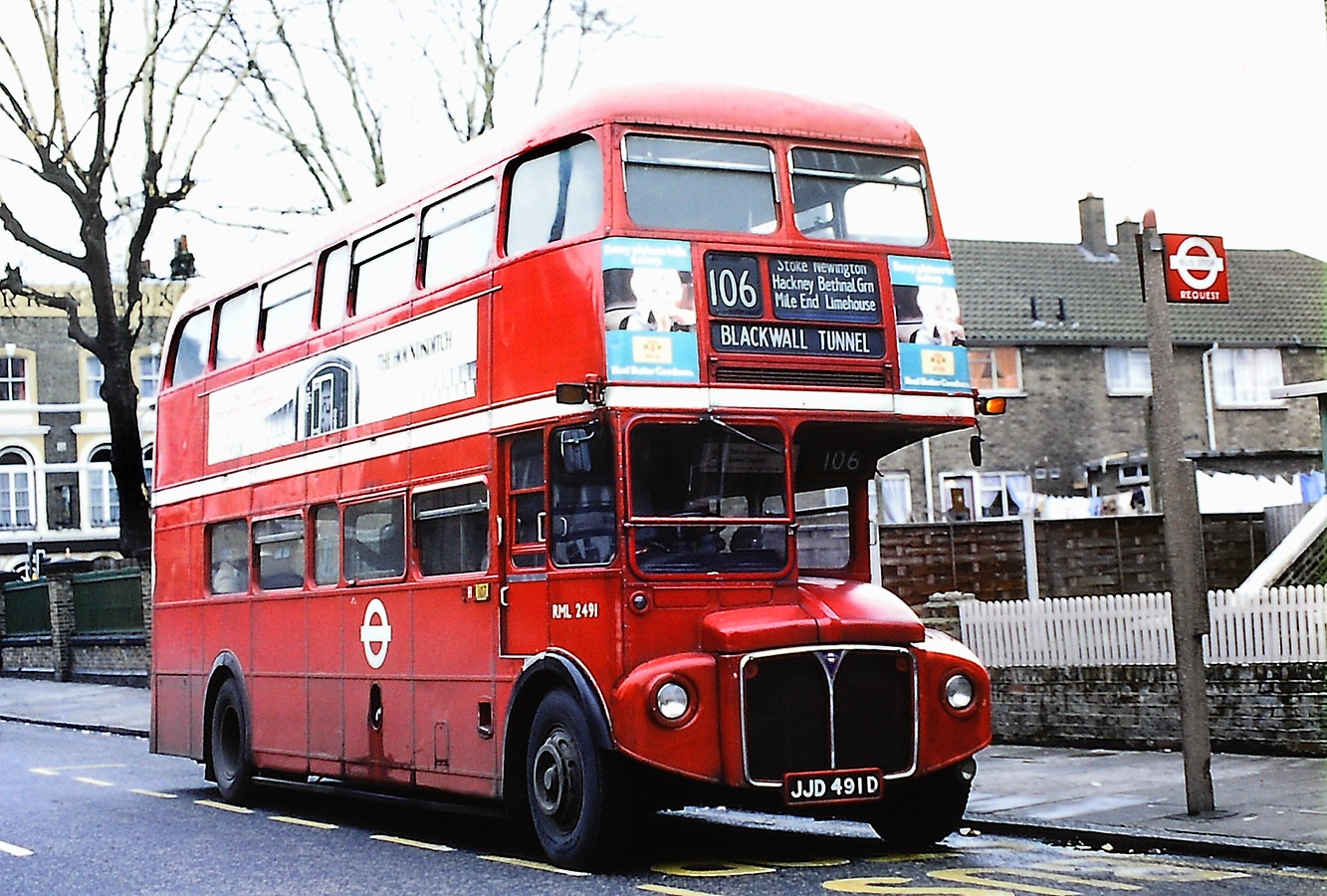
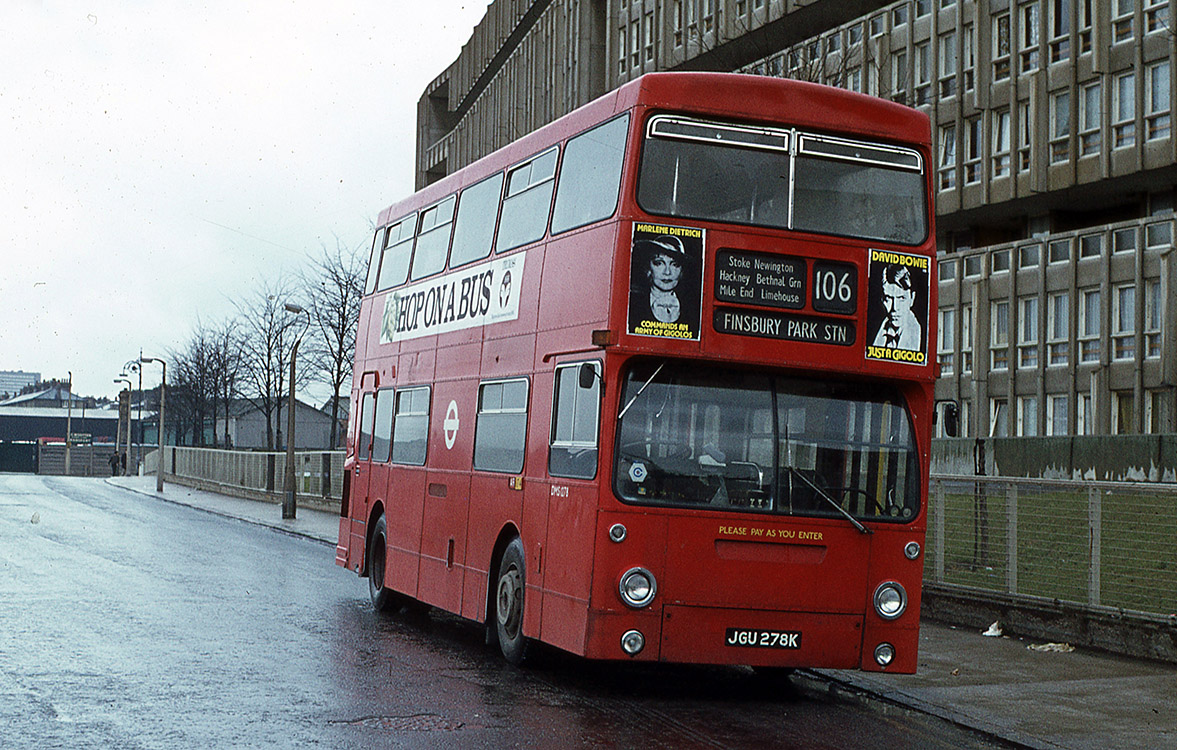
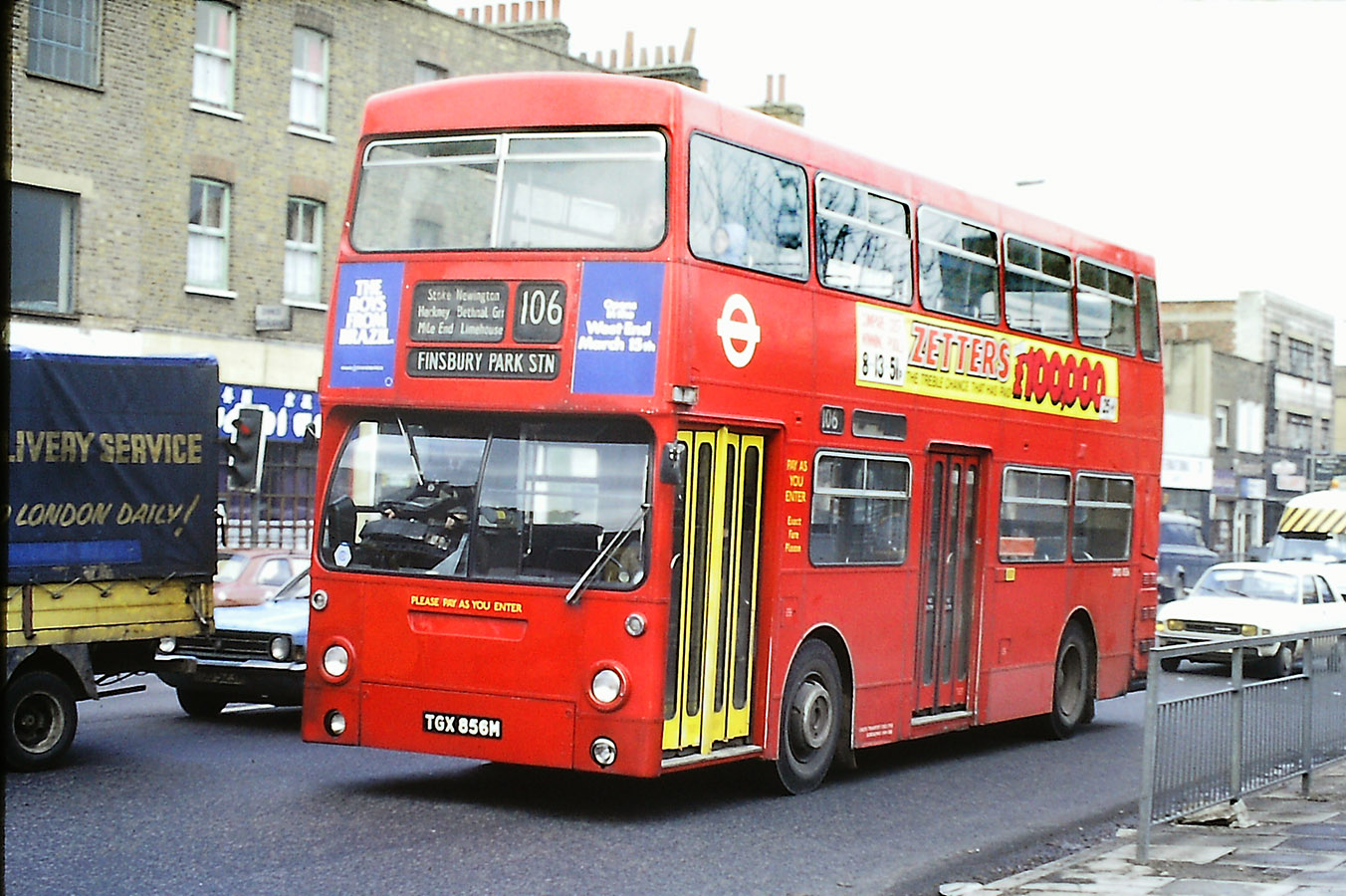
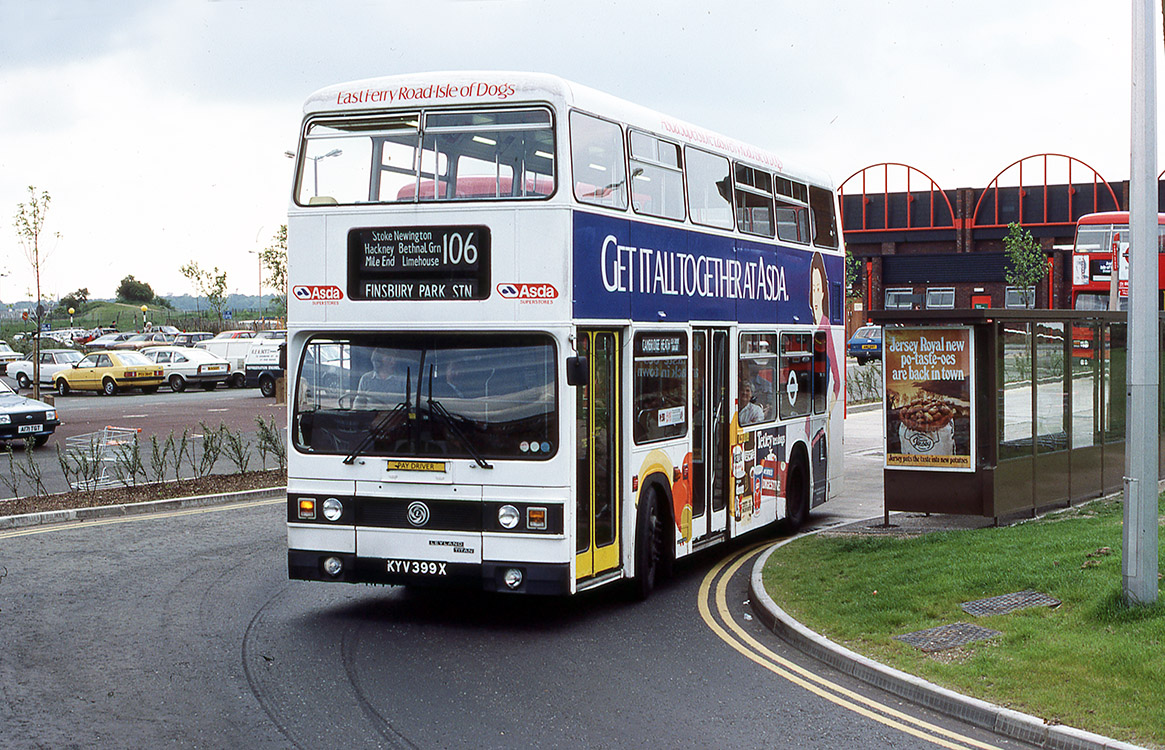
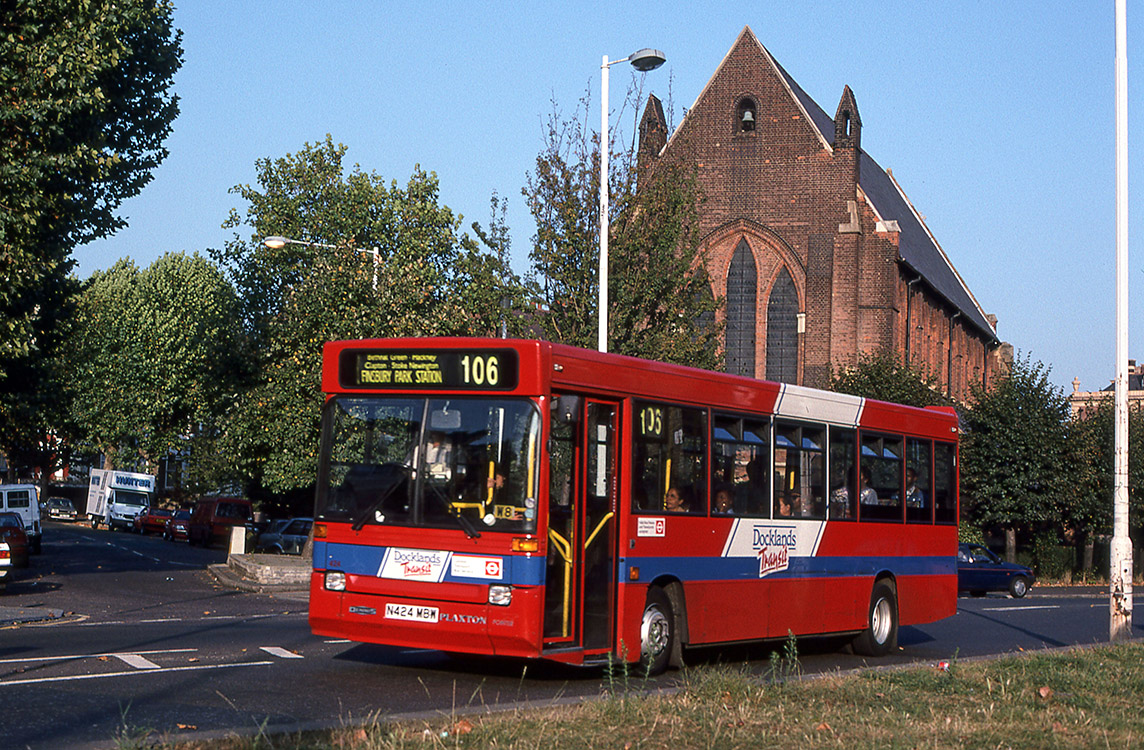
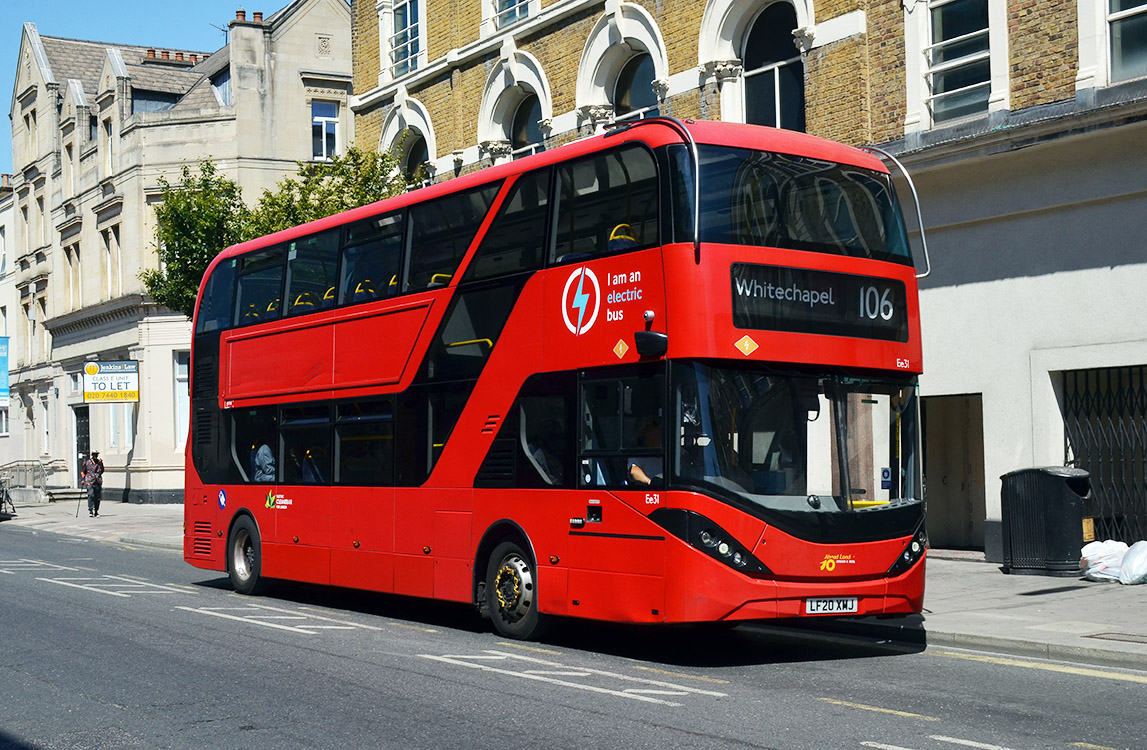
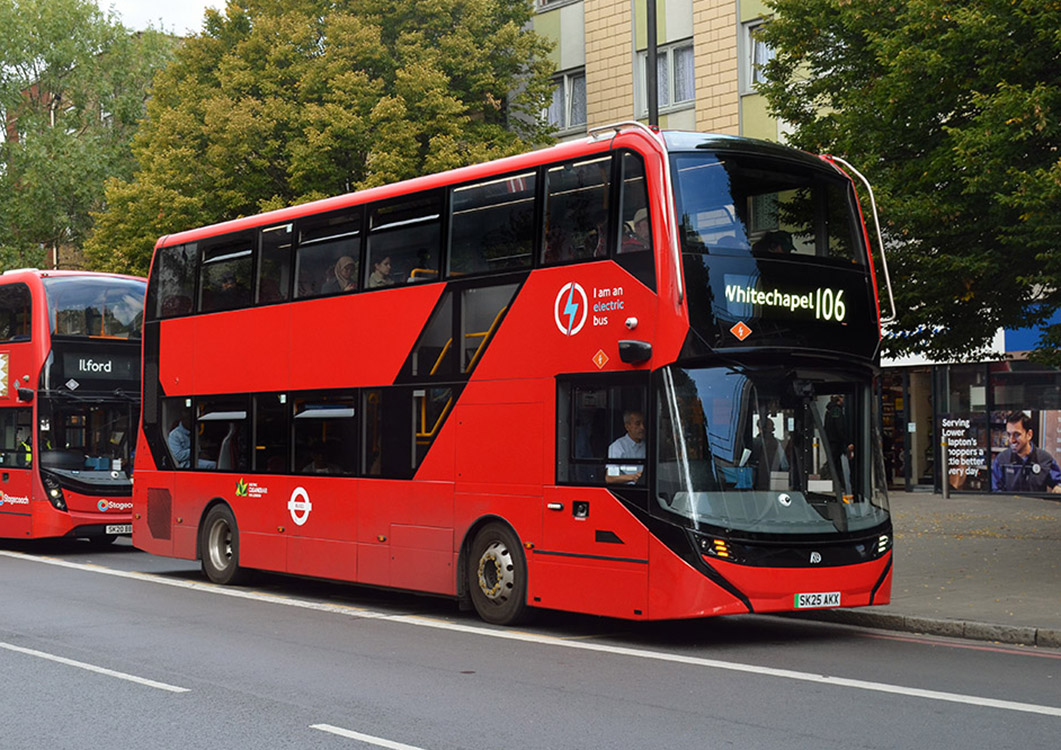

Photo Gallery
Click on photo for gallery. Hover on photo for caption
Maps
Check back for maps